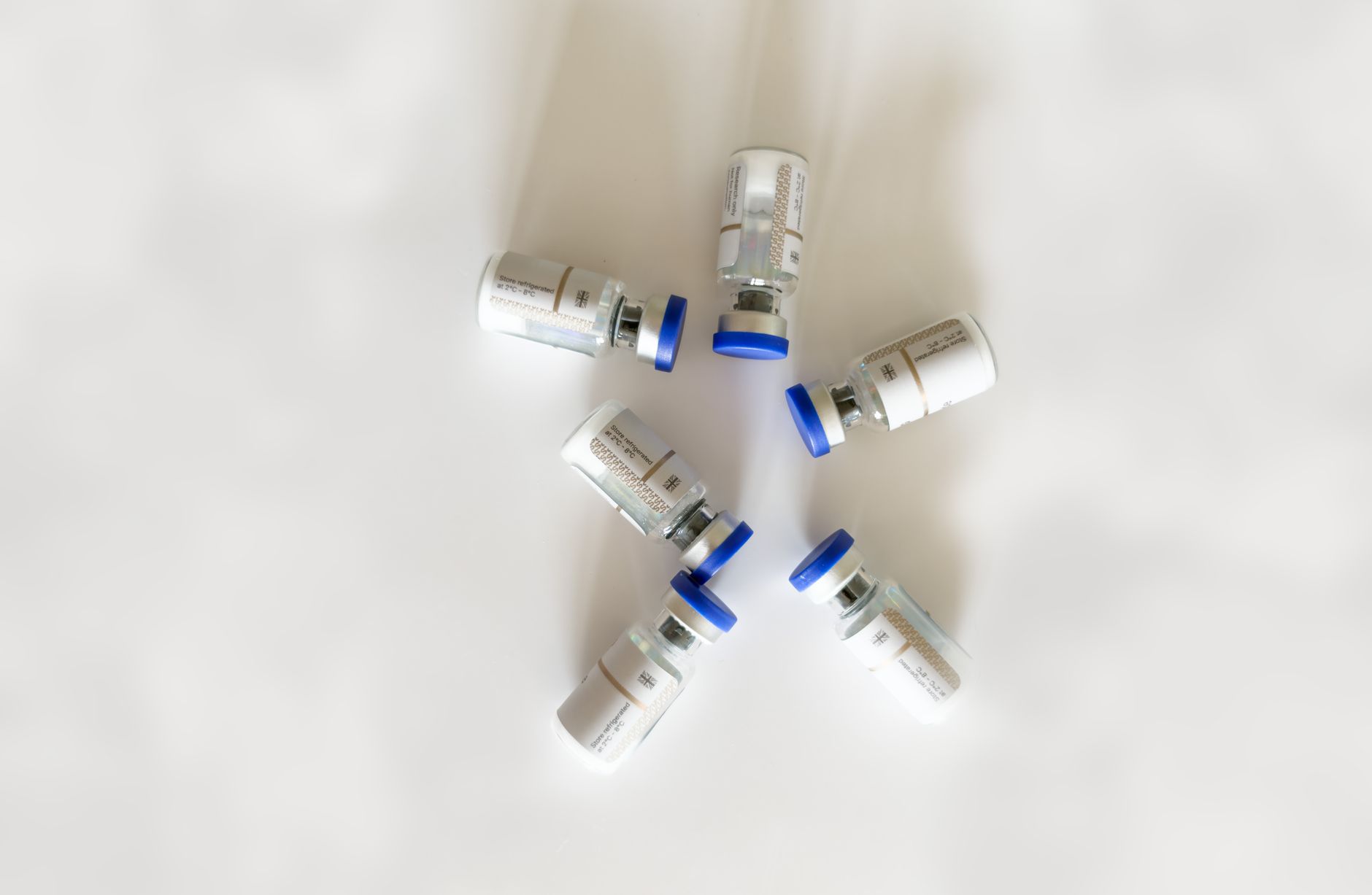
Service members cannot legally use BPC-157, TB-500, CJC-1295, or most other peptides sold online, and some military drug tests are capable of catching them. The Department of Defense treats these compounds as unapproved drugs and prohibited supplement ingredients, not legal wellness products, even though the routine urinalysis given at most units was never built to detect them. That gap between "prohibited" and "routinely tested for" is where most confusion comes from. Understanding how the rules, the ingredient list, and the actual lab technology fit together is what lets a service member make an informed decision rather than relying on a seller's marketing claims.
Table of Contents
- Are peptides actually against military rules?
- Will a routine drug test actually catch it?
- Why "research chemical" labeling doesn't protect a buyer
- What could change for service members
- What a service member can actually do
Are peptides actually against military rules?
Yes. The Defense Department's Operation Supplement Safety (OPSS) program names BPC-157 directly as an unapproved drug and a prohibited peptide, warning troops away from it in OPSS's "What's Supp" campaign materials. That guidance sits inside a formal structure, not just advice: OPSS maintains the DoD Prohibited Dietary Supplement Ingredients database under DoD Instruction 6130.06, and any ingredient on that list, including controlled substances and unapproved drugs, is off-limits to service members under the department's prohibited-ingredients database, last updated May 26, 2026. The list reaches well beyond BPC-157 by name.
It incorporates the World Anti-Doping Agency's S2 category, which bans growth-hormone-releasing peptides, secretagogues, growth factors, and fragments such as TB-500, CJC-1295, and IGF-1 — and does so with "including but not limited to" language, so unnamed peptides in the same family are covered too, according to a legal analysis of the military's peptide rules. A peptide doesn't need its own line item to be banned; falling into the S2 category is enough. That means the common defense of "it's not specifically named on the list" doesn't hold up for most peptides marketed to service members. If a compound functions as a growth-hormone secretagogue or a healing peptide in the same class as BPC-157 or TB-500, it's already prohibited regardless of whether it appears by its exact brand or chemical name.
Will a routine drug test actually catch it?
Usually not, but that's a narrower protection than it sounds. Standard military urinalysis relies on immunoassay technology designed to flag marijuana, cocaine, amphetamines, opiates, and benzodiazepines — the panel built for traditional drugs of abuse — and it is not built to identify peptide compounds like BPC-157 without a separate, targeted test, according to an industry guide on military drug-testing technology. That doesn't mean peptides are undetectable. A 2023 peer-reviewed method using ultra-high-performance liquid chromatography paired with high-resolution mass spectrometry (UHPLC-HRMS) validated detection of BPC-157 and five of its metabolites in human urine, with detection limits as low as roughly 0.01 to 0.11 nanograms per milliliter, according to the peer-reviewed study published via PMC.
That confirms the science exists to find BPC-157 in urine when a lab specifically targets it. The practical takeaway: routine testing is not a reliable screen for peptides today, but that's a technology gap, not a legal one. A command investigating a specific service member — after an injury, a tip, or a broader audit — can order the targeted test that routine panels skip. Relying on "they don't test for it" is a bet on current lab practice, not a legal protection, and that practice can change.
Why "research chemical" labeling doesn't protect a buyer
Many online sellers market peptides as "research chemicals, not for human consumption" specifically to dodge drug-approval requirements. That label doesn't hold up under scrutiny. In warning letters dated August 24, 2026, the FDA named a seller, Royal Peptides LLC, and flagged tirzepatide, semaglutide, retatrutide, SS-31 (elamipretide), PT-141, tesamorelin, and a product called "BIMORELIN" as unapproved new drugs under the Food, Drug, and Cosmetic Act, according to the FDA's warning letter.
📨 Get Free Peptide Risk Guides Alerts
Free · No spam · Unsubscribe anytime
The agency's reasoning matters for anyone weighing the "research use" framing: FDA investigators found dosing charts, injection instructions, and dose calculators on the same sites, which showed the products were actually being marketed for human self-use — directly undercutting the research-chemical disclaimer, per the same FDA warning letter. A disclaimer buried in fine print doesn't change what a site is actually selling and how. OPSS separately warned consumers, in a notice posted September 28, 2026, that companies are selling peptides as unregulated research chemicals and that using unapproved injectable peptides carries serious, documented health consequences, according to OPSS's consumer warning. For a service member, that combination — an unapproved drug, sold under a legal fiction, with real health risk — removes any practical argument that a "research use only" peptide is a safe or defensible gray area.
What could change for service members
The rules aren't static, and a bill currently in Congress would make DoD's list more current rather than less strict. H.R.
8962, the PERFECT Act, was introduced in the 119th Congress and referred to the House Armed Services Committee; it would require the Secretary of Defense to publish and update, at least every 90 days, separate lists of prohibited supplement ingredients and prohibited performance-enhancing substances, according to a tracker of the bill's status. A mandated 90-day update cycle would make it harder for a new peptide to stay off the list simply because it's new to the market — the gap that sellers currently exploit by introducing slightly reformulated or renamed products faster than lists get revised. Service members should treat the current prohibited-ingredients database as a floor, not a ceiling: it already reaches unnamed peptides through the WADA S2 category, and formal rule changes are likely to tighten enforcement further rather than loosen it.
What a service member can actually do
The decision isn't really about whether a specific product will show up on this month's urinalysis. It's about whether use is authorized at all, and under the current rules it generally isn't.
- Check the ingredient against OPSS's prohibited-ingredients database before assuming a peptide is a legal supplement.
- Don't rely on "research chemical" labeling as cover — FDA has already shown that dosing instructions on a seller's site undercut that claim.
- Don't assume a negative routine drug test means a peptide is undetectable — it means the standard panel didn't look for it, not that a targeted test couldn't find it.
- Treat any growth-hormone-related peptide (secretagogues, growth factors, fragments) as covered by the WADA S2 category even if it isn't named individually.
- Watch for list updates, since Congress is actively considering a requirement that DoD refresh its prohibited lists every 90 days rather than on an irregular schedule.
You Might Also Like
- Peptides and Drug Testing: What the WADA Prohibited List Covers
- Peptides in Bodybuilding: The Health Risks
- How Long Do Peptides Stay Detectable in Urine?