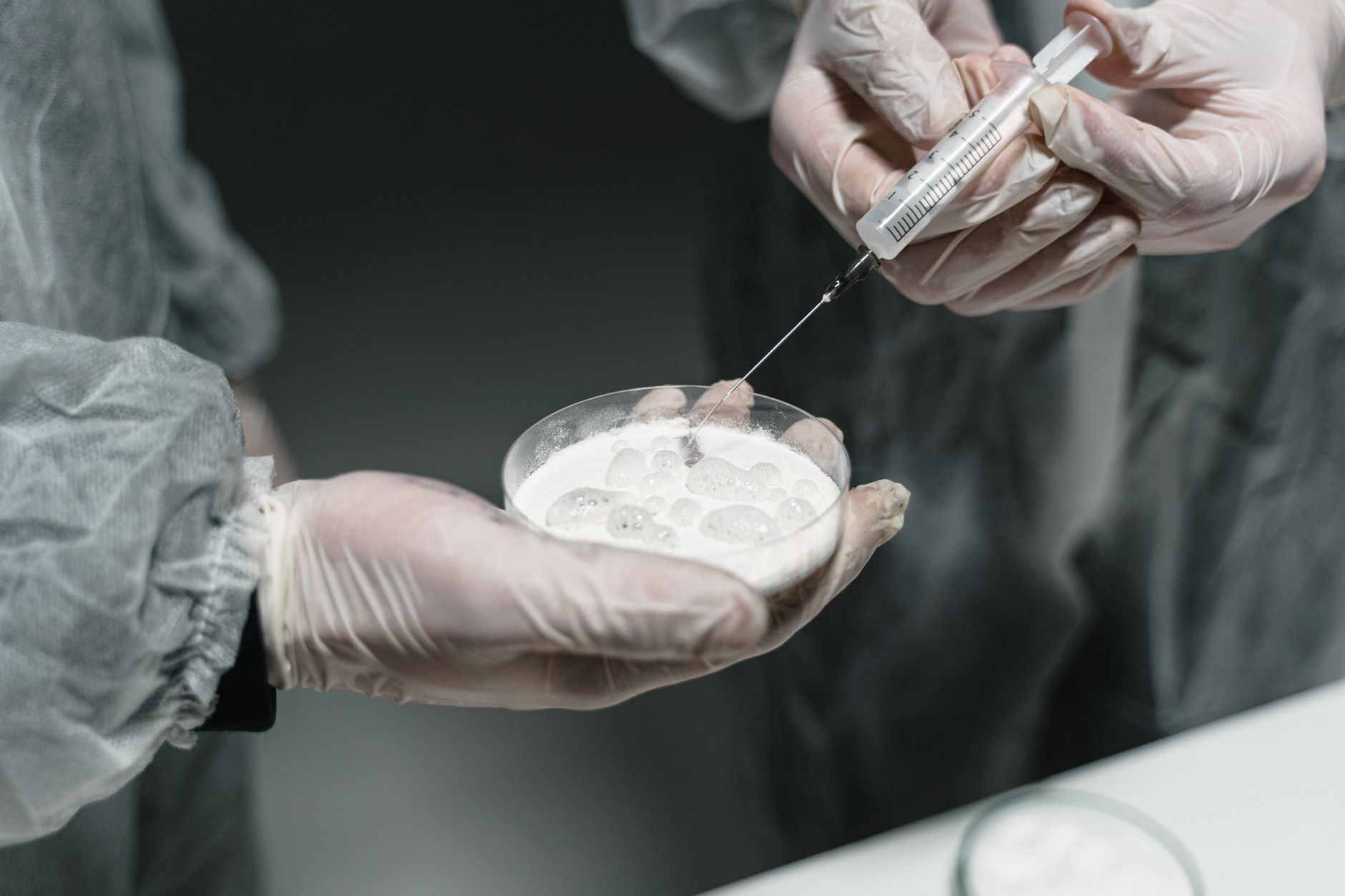
Yes. BPC-157 is prohibited at all times under the World Anti-Doping Agency (WADA) Prohibited List, and accredited anti-doping laboratories have had validated urine tests for it since 2017.
A standard urine sample analyzed at a WADA lab can detect both the intact peptide and its breakdown products at concentrations well below one nanogram per milliliter. BPC-157 is a synthetic 15-amino-acid peptide marketed online for tendon, gut, and joint healing. No government regulator has approved it for human therapeutic use, which is exactly why it is banned — and why a tested athlete who uses it has no realistic defense.
Table of Contents
- Where BPC-157 sits on the Prohibited List
- What the laboratory test actually detects
- How long it stays detectable
- Athletes have been banned without a positive test
- The contaminated-supplement problem
- Regulatory status, and why no therapeutic defense exists
- Frequently Asked Questions
Where BPC-157 sits on the Prohibited List
BPC-157 falls under class S0, Non-Approved Substances, which covers pharmacological substances that no government health authority has approved for human therapeutic use. According to Sport Integrity Australia's substance page, the peptide was added effective with the 2022 Prohibited List and is named explicitly in the S0 text, and it remains on the 2025 and 2026 Lists. "Prohibited at all times" means the ban is not limited to competition days.
Out-of-competition testing, which most registered athletes are subject to year-round, catches S0 substances the same way it catches anabolic agents and hormones. The U.S. Anti-Doping Agency classifies BPC-157 as a Specified Substance within that non-approved class. It also says a Therapeutic Use Exemption is unlikely to be granted, because approved alternatives exist for the conditions people take BPC-157 for, although each application is judged on its own facts.
What the laboratory test actually detects
A WADA-accredited laboratory in Salt Lake City published the first urine detection method for BPC-157, reported in Drug Testing and Analysis in 2017 with a limit of detection near 0.1 ng/mL. The same work found the peptide stayed stable in urine for at least four days, meaning a sample does not need to reach the lab immediately to yield a result. Testing capability has since widened.
The Shanghai Anti-Doping Laboratory mapped BPC-157's metabolic profile using high-resolution mass spectrometry and reported urinary detection limits of 0.01 to 0.11 ng/mL for the parent peptide plus five main metabolites. That matters practically. Metabolites usually persist after the parent compound has cleared, so a lab looking for six markers rather than one has a wider window than the original 2017 assay allowed.
How long it stays detectable
There is no published human excretion study — nobody has dosed volunteers with BPC-157 and measured clearance in urine over time. Sport Integrity Australia notes there are no studies of BPC-157 use in human subjects at all.
The "24 hours" and "three to five days" figures circulating on peptide forums and vendor sites are therefore extrapolations from laboratory stability data and test-tube work, not measured detection windows. Treating them as a schedule for timing a dose around a test is guesswork dressed as pharmacology. For an athlete in a testing pool, the practical conclusion is the opposite of reassuring: the detection window is unknown, the assay is sensitive to a fraction of a nanogram, and six separate markers are being screened for.
Athletes have been banned without a positive test
The most important point for anyone weighing risk is that an analytical finding is not required. USADA opened an investigation after a whistleblower tip and found evidence that triathlete Anthony McCauley, 46, possessed and used BPC-157 and TB-500. He accepted a four-year suspension and lost his competitive results, announced September 17, 2025.
His ban started September 9, 2025 and ran four years rather than five because USADA reduces sanctions of four years or more by one year when an athlete admits the violation and accepts within 20 days. Possession and use evidence alone carried a multi-year penalty. Lower-fault cases draw shorter sanctions. Per the USADA sanctions list, speedskater Kamryn Lute received a one-year sanction in August 2024 after voluntarily declaring she had used a supplement containing BPC-157 on a medical provider's advice, and UFC fighter Cortney Casey received a four-month suspension announced September 14, 2023.
📨 Get Free Peptide Risk Guides Alerts
Free · No spam · Unsubscribe anytime
The contaminated-supplement problem
USADA warns that BPC-157 is being illegally added to wellness and anti-aging products. Because it is a peptide and not a familiar steroid name, it can appear on a label under a code name, as "research peptide," or not at all.
Lute's one-year sanction came from a supplement, not a vial — and she had been advised by a medical provider. Strict liability still applied. If you are in a testing pool:.
- Check every product against your anti-doping organization's substance database before first use, not after.
- Treat "peptide," "recovery blend," "regenerative," and "anti-aging" labeling as a reason to verify, not a reassurance.
- Ask a prescriber specifically whether anything they recommend is on the WADA List; a medical recommendation is not an exemption.
- Declare any suspected exposure proactively — voluntary disclosure is a factor in reduced sanctions.
- Keep the product, the lot number, and the receipt, since a contamination defense depends on physical evidence.
Regulatory status, and why no therapeutic defense exists
The FDA placed BPC-157 in Category 2 — bulk substances that may present significant safety risks for compounding — on September 29, 2023, citing immunogenicity risk by certain routes of administration along with peptide-impurity and active-ingredient characterization problems. It was removed from that list in April 2026 only because the nominations were withdrawn, which the agency says does not establish that the substance is eligible for compounding. The agency then took the question to its Pharmacy Compounding Advisory Committee on July 23, 2026, asking whether BPC-157 acetate and BPC-157 free base should be added to the 503A bulks list.
Its May 2026 briefing document concluded that the evaluation criteria weigh against adding either form. So the S0 classification is not a technicality awaiting correction. There is no approved human form of BPC-157 to support a therapeutic-use claim, which is precisely the gap that makes a TUE application unlikely to succeed.
Frequently Asked Questions
Does an out-of-competition test screen for BPC-157?
Yes. S0 substances are prohibited at all times, so year-round out-of-competition samples are analyzed for them exactly as in-competition samples are.
Can I get a TUE for BPC-157 for a tendon injury?
USADA states a TUE is unlikely to be approved because permitted alternatives exist for those conditions, though applications are assessed case by case.
Does a doctor prescribing or recommending it protect me?
No. Kamryn Lute still received a one-year sanction after using a BPC-157 supplement on a medical provider's advice.
Is oral BPC-157 treated differently from injection?
Not for anti-doping purposes. The S0 listing covers the substance, and the FDA's Category 2 citation flagged immunogenicity risk by certain routes rather than clearing any route.
You Might Also Like
- Why Sport Integrity Australia Is Watching Social Media Peptide Sales?
- How Youth Sports Organizations Are Responding to Peptide Doping Fears
- How Wellness Products Like Peptides Cause Accidental Doping Violations