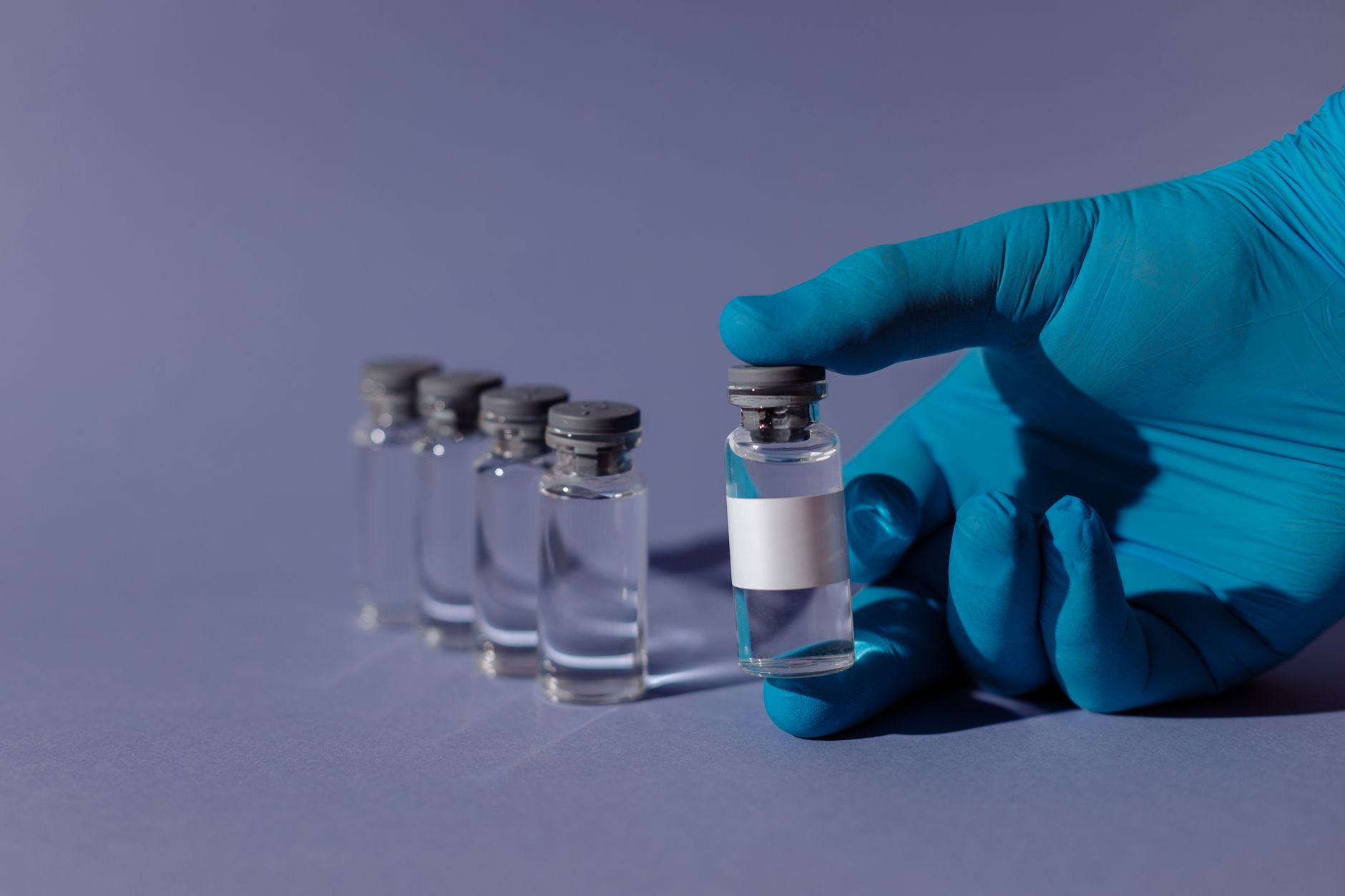
Check the tamper seal, closure, vial, and contents before injecting any peptide. Do not use the vial if the seal is loose, broken, or tampered with, or if the drug looks contaminated, discolored, or expired.
A tamper seal is tamper-evident packaging. The U.S. Pharmacopeia defines it as a system that cannot be entered without obvious destruction of the seal or another part of the system, described in the USP definition of tamper-evident packaging.
Table of Contents
- What does an intact vial seal include?
- Which seal problems mean do not use it?
- How should you inspect the vial before injecting?
- How do you handle the stopper at injection time?
- Why does an intact seal not prove the peptide is safe?
What does an intact vial seal include?
An injectable peptide vial usually has a glass vial, rubber-like stopper, aluminum seal, and plastic flip-off button. The compressed contact between the stopper flange and vial rim forms the main barrier that protects shelf life, according to the West Pharmaceutical Services explanation of vial closures.
The crimped aluminum skirt folds under the vial flange. That crimp holds the stopper tight and blocks contaminants from entering at the vial-stopper joint. The plastic button covers the center target area until first use.
Which seal problems mean do not use it?
Any visible break, cut, lift, crack, missing piece, loose skirt, or button that is gone or does not fit tightly means the tamper-evident system has failed. A seal that spins, slides up, leaves a gap, or shows a punctured center before you clean and needle it is also a fail.
Treat doubt as a reason to discard. CDC injection-safety guidance directs discarding any medication vial whenever sterility is compromised or questionable, stated in the CDC injection-safety guidance. Do not transfer the liquid to another vial, save it, or judge it by smell or clarity alone.
📨 Get Free Peptide Risk Guides Alerts
Free · No spam · Unsubscribe anytime
How should you inspect the vial before injecting?
Check the prescription label, vial expiration date, and diluent expiration date. CDC directs checking vial and diluent dates and inspecting for damage, particles, discoloration, or contamination, and never using expired product or equipment, listed in the CDC vaccine preparation checklist.
- Confirm the seal is fully crimped with no lift or sharp edge.
- Confirm the flip-off button is present until you remove it.
- Check dates, cracks, chips, loose stopper, particles, color change, and cloudiness.
- For an opened multidose vial, confirm the open date and discard limit.
How do you handle the stopper at injection time?
Remove the flip-off button, then inspect the exposed rubber center. Look for damage, embedded material, moisture under the seal, or an already punctured hole.
Disinfect the rubber septum with alcohol before piercing it. CDC outpatient-oncology guidance specifies 70% alcohol and allowing it to dry before inserting a device, detailed in the CDC outpatient-oncology infection guidance. Insert only a sterile needle or spike, and do not touch the cleaned center.
Why does an intact seal not prove the peptide is safe?
An intact seal shows the package was not opened, but it does not show what is inside. Compounded drugs are not FDA-approved, so FDA does not review their safety, effectiveness, or quality before marketing, according to the FDA explanation of compounded-drug risks. Poor compounding can cause contamination or wrong strength, with risk of serious injury or death.
That limit matters for gray-market peptides. In August 2026 FDA warned sellers that injectable semaglutide, tirzepatide, and retatrutide sold as research peptides were unapproved drugs when marketed for human use, reported in the Kymata Health report on the August 2026 FDA warning letters. A neat crimp on such a vial does not prove sterility, identity, purity, or dose.
You Might Also Like
- Third-Party Peptide Testing: What HPLC and Mass Spec Show
- Peptide Purity Claims: What 99% Actually Means
- How Peptide Scams Spread Through Fitness Influencer Ads