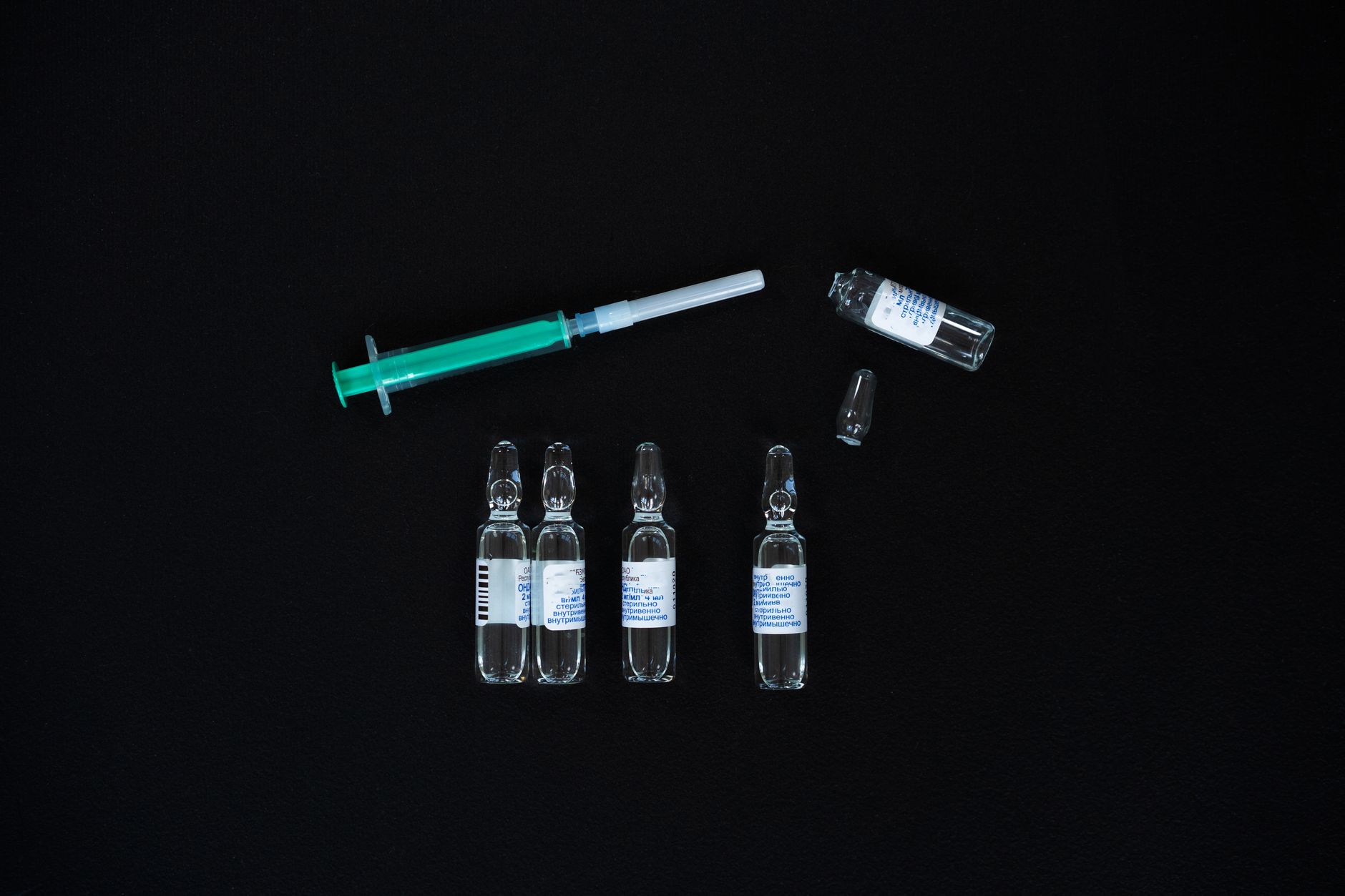
BPC-157 is not an FDA-approved drug in the United States, and it cannot be sold legally as a dietary supplement — but since October 30, 2026, a licensed pharmacy can compound it for a named patient without the government pursuing enforcement. That single change explains most of the confusion buyers encounter right now: the peptide moved from "no lawful retail path at all" to "one narrow, prescription-only path," while everything sold on research-chemical websites stayed exactly as unlawful as it was before. BPC-157 is a synthetic chain of 15 amino acids, derived from a protein sequence found in human gastric juice, marketed for tendon, ligament and gut healing. What follows is what the current federal position actually says, what conditions attach to it, and what a buyer is exposed to depending on where the vial comes from.
Table of Contents
- What the October 2026 federal policy actually changed
- Why enforcement discretion is not the same as approval
- The conditions a legitimate compounded product must meet
- What FDA has said about the safety risks
- Research-chemical vials, supplements, and sport
- What may change next
- Frequently Asked Questions
What the October 2026 federal policy actually changed
The Department of Health and Human Services published an interim Enforcement Discretion Policy Regarding 503A Compounding Using Certain Peptide Bulk Drug Substances in the Federal Register on October 30, 2026. It states that HHS does not intend to take enforcement action against state-licensed pharmacies, federal facilities, or licensed physicians who compound with a short list of named peptides. BPC-157 is on that list. "Section 503A" refers to the part of federal drug law covering traditional pharmacy compounding — a pharmacist preparing a drug for an individual patient against a prescription. Normally a bulk substance has to appear on an approved list before a 503A pharmacy may compound with it.
BPC-157 is not on that list. The policy does not add it; it says the government will not act on the gap for now. The six peptides named in Appendix A are BPC-157, Epitalon, KPV, MOTS-c, Semax and TB-500. Appendix B restricts BPC-157 acetate to subcutaneous, intramuscular, oral and topical dosage forms. A nasal spray, for example, falls outside the policy entirely — the pharmacy compounding it gets no protection at all.
Why enforcement discretion is not the same as approval
This is the distinction that costs buyers money. As the law firm Holland & Knight set out in its analysis of the interim policy, BPC-157 is still absent from the 503A Bulk Drug Substances List, no FDA-approved BPC-157 product exists, and a compounded dose remains an unapproved drug. HHS has said it may revisit the policy if a safety or quality signal emerges. Practically, that means nobody has reviewed BPC-157 for safety and effectiveness and said yes.
There is no approved label, no established dose, no indication, and no manufacturer carrying regulatory responsibility for outcomes. A prescriber writing for it is working outside the approval system, not inside it. It also means the ground can move. An enforcement discretion policy is a statement of current intent, published as an interim measure. Anyone building a long-term protocol around continuous access should understand they are relying on a policy that HHS has openly reserved the right to withdraw.
The conditions a legitimate compounded product must meet
The policy is conditional, and the conditions are specific. The HHS policy document requires, among other things: These double as a buyer's checklist.
A vial arriving without that labeling, or sold as a blend, or shipped without a prescription tied to your name, did not come through the compliant path — regardless of what the seller's website claims about the new policy. Several of the conditions are also the only quality controls in the chain, since no approved manufacturing standard exists for this substance.
- One active ingredient per product — no multi-peptide blends
- A certificate of analysis from an active pharmaceutical ingredient manufacturer registered under section 510 of the Federal Food, Drug, and Cosmetic Act
- A patient-specific prescription, not stock sold to anyone who orders
- Labeling that reads "This is a compounded drug product. Not for resale."
- Reporting of adverse events and quality problems to FDA and to state authorities
What FDA has said about the safety risks
FDA placed BPC-157 in Category 2 in 2023 — bulk substances that raise significant safety risks. According to a regulatory analysis of compounded peptides by D.J. Holt Law, the agency cited immunogenicity risk for certain routes of administration, peptide-related impurities, difficulty characterizing the active ingredient, and limited safety data for the proposed routes. Immunogenicity means the body may mount an immune response against the injected peptide.
Impurities matter because peptide synthesis produces closely related fragments and truncated chains that are hard to separate and may have their own biological effects. "Difficulty characterizing the API" is the plainest problem of all: it is hard to confirm that what is in the vial is what the label says. Those concerns were not retracted by the October policy. The enforcement position and the safety assessment coexist: HHS has decided not to pursue compounders for now, while FDA's stated reservations about the substance remain on the record.
📨 Get Free Peptide Risk Guides Alerts
Free · No spam · Unsubscribe anytime
Research-chemical vials, supplements, and sport
The main retail channel remains vials sold online as "research chemicals" marked not for human consumption. That phrasing is a legal posture, not a quality claim. FDA has treated research-labeled BPC-157 marketed toward people as an unapproved new drug, and USADA advises athletes never to use a product marketed for research purposes only. These products sit outside the compounding policy completely — no pharmacy, no prescription, no certificate of analysis. The supplement route is closed as well.
The Department of Defense's Operation Supplement Safety program states plainly that BPC-157 is not a dietary ingredient, that it is an unapproved drug, and that it appears on the DoD Prohibited Dietary Supplement Ingredients List. A capsule or powder on a supplement shelf listing BPC-157 is misbranded on its face. For anyone subject to anti-doping rules, the answer is unambiguous. USADA states BPC-157 has been prohibited at all times under class S0, Non-Approved Substances, since the 2022 WADA Prohibited List, and that because it is not approved as a therapeutic anywhere in the world there is no basis for a Therapeutic Use Exemption. It remains prohibited under S0 on the 2027 Prohibited List effective January 1, 2027, and athletes are strictly liable for what is in their bodies no matter what a product's label says. A valid compounded prescription does not change that — the compounding policy and the anti-doping rules answer different questions.
What may change next
FDA's Pharmacy Compounding Advisory Committee met on July 23–24, 2026 to consider peptides nominated for the 503A bulks list, and voted 8–6 to recommend adding BPC-157. That is a narrow margin on a committee whose recommendations are advisory only; FDA is not bound by them, and listing is a separate, formal step that has not happened. So there are two open tracks.
One is the permanent question of whether BPC-157 joins the bulks list, which would give compounding a durable legal basis rather than a discretionary one. The other is the interim policy itself, which HHS can narrow or end. If you are considering this peptide, the concrete next step is to ask a prescriber whether they will write for it and which pharmacy they use, then ask that pharmacy for the certificate of analysis and the registration status of its API supplier. If the answer involves ordering a vial yourself from a website, you are not in the lawful path the October policy created — you are in the one FDA has already called an unapproved new drug.
Frequently Asked Questions
Can my doctor prescribe BPC-157 now?
A licensed physician or state-licensed pharmacy can compound it under the HHS interim policy, with a patient-specific prescription and the required certificate of analysis. Whether an individual prescriber is willing to do so is a separate clinical and liability judgment.
Is possessing BPC-157 a crime?
It is not a controlled substance. The legal problems in this area attach mainly to selling and marketing it — as an unapproved new drug or a misbranded supplement — rather than to personal possession.
Does the policy cover nasal sprays or peptide blends?
No. Appendix B limits BPC-157 acetate to subcutaneous, intramuscular, oral and topical forms, and the policy requires one active ingredient per product, so blends and other routes fall outside it.
You Might Also Like
- How to Report a Suspected Counterfeit Peptide Seller to the FDA
- Who Should Not Take GLP-1 Medications
- Should College Athletes Use GLP-1 Weight Loss Drugs?