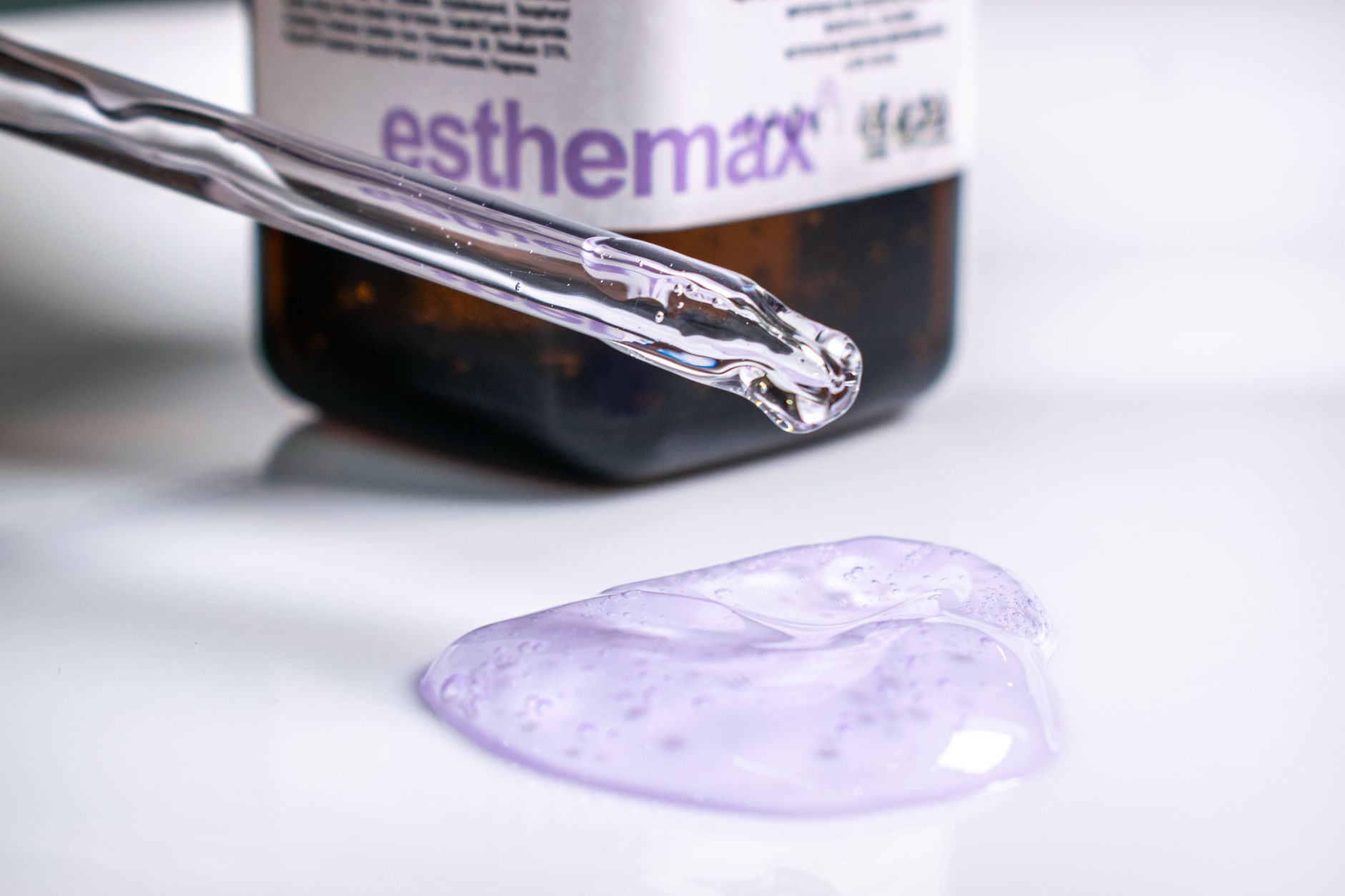
Matrixyl is the trade name for palmitoyl pentapeptide-4, a lab-made peptide added to anti-aging creams and serums to encourage skin to make more of its own collagen. The evidence behind it is real but limited: it rests on a small set of studies, most of them funded by the company that sells the ingredient. The peptide's story starts with a single five-amino-acid fragment, not a finished skincare product. Understanding where that fragment came from, what was actually tested, and who tested it explains both why Matrixyl shows up in so many wrinkle creams and why the claims printed on those bottles deserve a skeptical read.
Table of Contents
- What Matrixyl Actually Is
- What the Human Trial Actually Showed
- Why the Evidence Doesn't Fully Close the Case
- How to Read a Matrixyl Product Label
- Who This Ingredient Is (and Isn't) Studied For
What Matrixyl Actually Is
Matrixyl is not a single, novel molecule invented for cosmetics. It starts from KTTKS (Lysine-Threonine-Threonine-Lysine-Serine), a five-amino-acid sequence that occurs naturally as part of type I human procollagen. Researchers at Katayama et al. identified this exact sequence in 1993 as the minimum fragment needed to stimulate fibroblasts — the skin cells that produce collagen, a structural protein that keeps skin firm — to make more type I and type III collagen and fibronectin, without changing overall protein output. On its own, KTTKS does not penetrate skin well.
The French ingredient manufacturer Sederma solved that by attaching a 16-carbon fatty acid chain (palmitic acid) to the peptide, creating palmitoyl pentapeptide-4, commonly shortened to Pal-KTTKS. Sederma introduced this modified molecule under the brand name Matrixyl around 2000, according to Paula's Choice's ingredient dictionary. The fatty chain is what lets the peptide cross into the skin's outer layers in a usable concentration. One naming detail matters for anyone comparing products: "Matrixyl" and "Matrixyl 3000" are not the same ingredient. Matrixyl 3000 is a separate Sederma complex that combines palmitoyl pentapeptide-4 with a second peptide, palmitoyl tripeptide-5, as The INKEY List explains. A product citing "Matrixyl" research does not automatically inherit results from a Matrixyl 3000 formula, or vice versa.
What the Human Trial Actually Showed
The most-cited human evidence is a 2005 trial by Robinson and colleagues. It ran for 12 weeks as a double-blind, placebo-controlled, split-face study in 93 Caucasian women between 35 and 55 years old, with a moisturizer containing 3 parts per million of Pal-KTTKS applied to one side of each participant's face and a control moisturizer applied to the other. The results favored the peptide side. Researchers reported the treatment was well tolerated, with no increase in redness or stinging compared to the vehicle, and found a statistically significant improvement in wrinkles and fine lines on the Pal-KTTKS side, measured by both image analysis and expert visual grading.
That combination — an objective measurement plus a trained evaluator's assessment, both agreeing — is a meaningful detail in cosmetic ingredient research, where results sometimes rely on one method alone. Two limits apply directly to how far this trial can be stretched. It tested one specific concentration (3 ppm) in one demographic (Caucasian women aged 35-55), so it says nothing about other skin tones, younger users, or higher or lower concentrations used in retail products. And a 12-week window shows short-term tolerability and appearance change; it does not establish what happens with years of continuous use.
📨 Get Free Peptide Risk Guides Alerts
Free · No spam · Unsubscribe anytime
Why the Evidence Doesn't Fully Close the Case
Most of what connects Matrixyl to new collagen production is laboratory work, not evidence from living human skin. The original fibroblast studies measured collagen output in cell cultures in a dish, and much of the ingredient's supporting research continues to rely on manufacturer-supplied in-vitro assays rather than collagen measured directly in human skin, according to Paula's Choice and Evigrade's ingredient summaries. A fibroblast responding to a peptide in a petri dish is a useful early signal, but it does not guarantee the same response occurs at the same scale once the peptide is diluted into a cream and applied to intact skin. The human trials that do exist, including the Robinson 2005 study, were small and sponsor-associated rather than large, independent randomized controlled trials.
That does not make the results false, but it narrows how confidently they generalize. Industry commentary has raised this same concern more broadly: Dermatology Times has cautioned that manufacturer-sponsored efficacy data for cosmetic peptides can overstate real-world effects compared with what independent, peer-reviewed research actually supports. A separate regulatory gap compounds this. In the United States, cosmetic ingredients like palmitoyl pentapeptide-4 are not subject to FDA premarket safety review, testing, or approval, unlike color additives, and manufacturers are not required to file ingredient safety data with the agency, according to a Congressional Research Service report. That means a product's Matrixyl content and claimed concentration are not independently verified before the product reaches shelves.
How to Read a Matrixyl Product Label
Given these gaps, a few label-reading habits separate a plausible claim from an inflated one:.
- Check whether the listing says "Matrixyl," "Matrixyl 3000," or just "palmitoyl pentapeptide-4" — these are not interchangeable, and a brand's cited study may not match what's actually in the jar.
- Treat "clinically proven" claims with the Robinson 2005 study in mind: it tested a 12-week window in one demographic, so a claim of permanent or dramatic transformation goes beyond what that data showed.
- Remember that ingredient concentration on most labels is not disclosed, so two products listing "palmitoyl pentapeptide-4" may deliver very different amounts of it.
- Expect realistic outcomes: tolerability (no added redness or stinging) and a measurable, moderate improvement in fine lines and wrinkles over weeks to months — not skin "rebuilding" or dramatic reversal of aging.
- Weigh marketing claims against the fact that no independent government body has verified the ingredient's safety data or the concentration claims on the bottle.
Who This Ingredient Is (and Isn't) Studied For
The published tolerability and efficacy data come from middle-aged Caucasian women using a specific low-dose formulation on fine lines and wrinkles. Readers outside that profile — different skin tones, younger users seeking prevention rather than correction, or anyone with reactive or compromised skin barriers — are relying on the ingredient's general safety profile and the absence of reported irritation in that one trial, not on data specific to their situation. The Robinson trial reported no increase in redness or stinging versus a plain moisturizer, which is a reasonable baseline for tolerability, but it is not a substitute for a patch test on new skin or a known sensitivity.
You Might Also Like
- Collagen Peptides: What the Supplement Evidence Supports
- Do Peptide Serums Work? What the Studies Show
- Copper Peptides (GHK-Cu) in Skincare: Topical Is Not the Same as Injected